 Blaine Robert Design
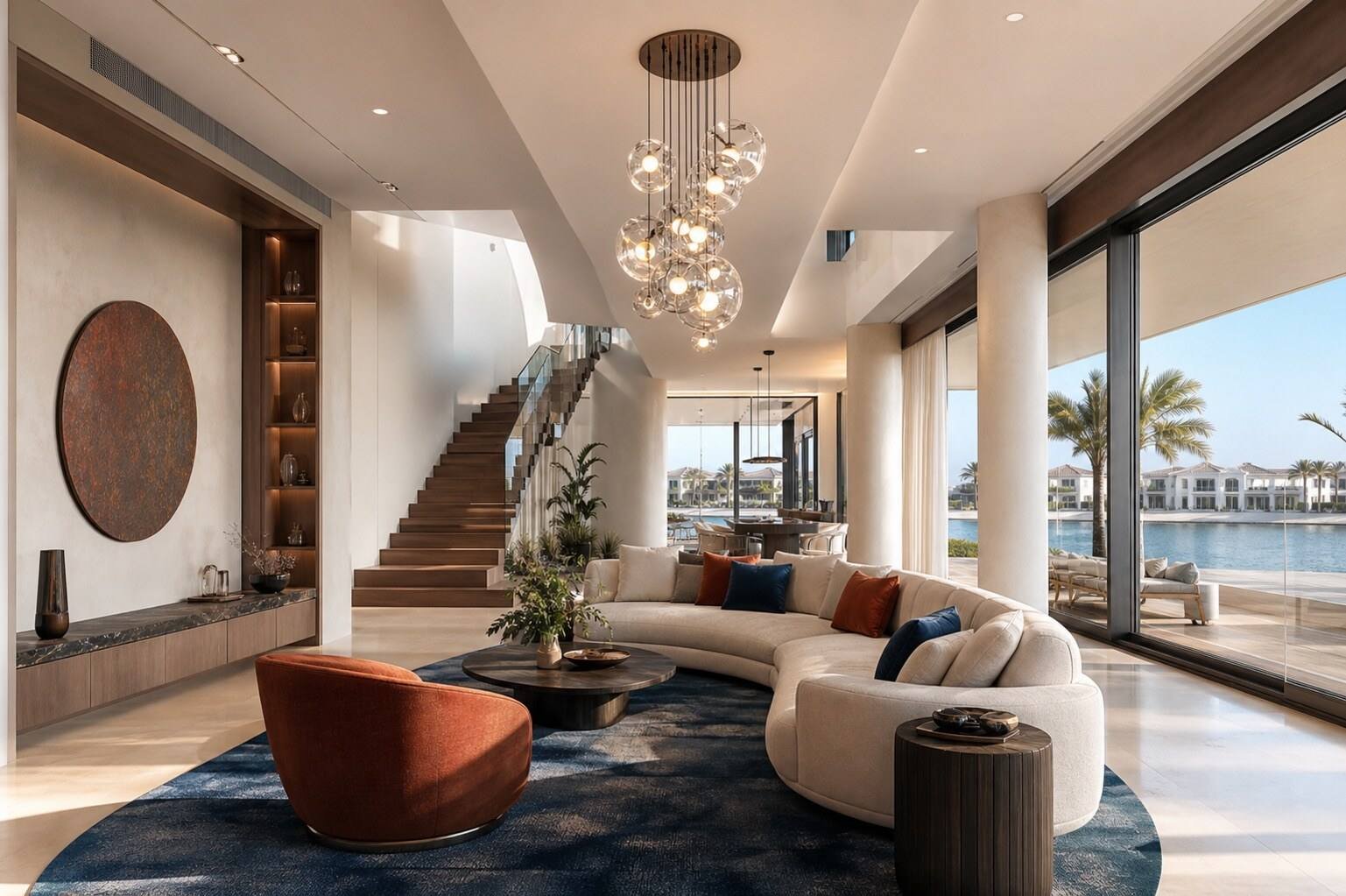
Luxury describes quality. Bespoke describes originality.
The two words get used interchangeably across India’s design market, but they answer different questions. Luxury asks: how good are the materials and how well are they executed? Bespoke asks: does this exist anywhere else? A home can be genuinely luxurious — premium marble, designer furniture, expert installation — while every element in it could be bought by anyone with the budget. Bespoke design starts from a blank page for one specific family, in one specific home, and produces work that literally cannot be replicated because it was never designed to be.
Both have their place. Not every project needs or can justify fully bespoke design. But conflating the two — paying bespoke prices for what is, underneath the marketing, a curated selection of catalogue pieces — is where clients most often feel misled after the fact.
What genuinely bespoke work looks like in practice
In a fully bespoke commission, the geometry of a staircase balustrade, the veining sequence chosen from a raw stone slab, the profile of a single door handle — each is a decision made for that home, not selected from an existing range. This is slower and more expensive than sourcing furnished rooms from a catalogue, because every element requires its own drawing, its own prototype, and its own approval before it is made.
The tell is usually simple: ask whether a specific piece was designed for your home or sourced from an existing collection. A studio doing genuine bespoke work will show you the drawings and the prototypes, not just the finished photograph. The same test applies in every room; our guide to home interior design in India sets out what bespoke looks like in each.
What luxury actually costs in India, honestly
Published rate cards vary enormously because "luxury" covers everything from a well-curated apartment to a fully bespoke palace-scale residence. The single biggest driver of cost is the proportion of custom-made versus sourced elements, not the size of the home alone.
Curious what genuinely bespoke design would look like in your home?
Book a Private ConsultationThree things that actually distinguish a luxury studio
- Nothing repeated. A studio doing genuine bespoke work should be able to say, honestly, that no two client homes look alike — not as a marketing line, but because the process makes repetition structurally unlikely.
- Personal direction from principal to installation. The person who leads your first consultation should be substantively involved through to the final styling, not handed off to a junior team once the contract is signed.
- Design and craft under one accountable roof. Studios that both design and build remove the gap between the drawing and the finished room — the single most common place where "luxury" on paper fails to survive contact with construction.
How to compare luxury interior designers on execution and finishing
Compare them on finished work you can inspect, not on renders. Five checks separate a studio that finishes well from one that only draws well:
- See a completed home. Ask for a visit or photographs of a finished, lived-in project, not visualisations, and look closely at corners, reveals and the lines where two materials meet.
- Check the joinery. Doors and drawers should close evenly, veneer grain should run on across neighbouring panels, and edges should be crisp, with no visible filler.
- Look at the stone. Veining that continues across slabs, tight joints and clean mitred edges show a studio that controls fabrication, not one that only orders it.
- Ask who makes it. Find out which workshops build the joinery and furniture, and who on the studio’s side inspects each piece before it reaches site.
- Ask how snagging works. A good studio walks the finished home with you, lists every defect in writing and puts each one right before handover.
Our guide to how to choose an interior design company in India covers the rest of the vetting, from contracts to references.
At Blaine Robert Design, bespoke work runs through the studio’s own interior design consultancy and interior architecture and build services under a single contract, directed personally by our founder from first sketch to final styling.
FAQ
What is the difference between luxury interior design and bespoke interior design?
Luxury generally describes the quality and cost of materials and execution. Bespoke describes originality — that a design was created specifically for one client and does not exist anywhere else. A home can be luxurious without being bespoke, using premium off-the-shelf pieces; true bespoke design is drawn from a blank page for that specific home.
How much does bespoke interior design cost in India?
Bespoke work follows scope, not a fixed rate card — the size of the home, the proportion of custom joinery, and the provenance of materials all drive cost.
Is luxury interior design only for very large homes?
No. The principles of luxury design — restraint, proportion, quality of material and craft — apply as much to a well-designed apartment as to a large villa. Scale changes the budget and the scope, not the discipline.
How do I know if a designer’s work is genuinely bespoke?
Ask directly whether specific elements — joinery profiles, furniture, lighting fixtures — were designed for your home or sourced from a catalogue. A studio doing genuinely bespoke work will be able to show you original drawings and prototypes, not just finished photographs.
Also in the Journal
More on designing well in India


Private Consultation
A home that could belong to no one else.
Begin with a private consultation — bring your plans, your references, your ambitions.